阴阳五行、藏象与子午流注Yin-Yang, Five Elements, Zang-Fu Systems & The 24-Hour Qi Clock
Traditional Chinese Medicine views the human body as a microcosm of nature (天人合一). Rather than isolating anatomical parts, it tracks how Vital Substances (Qi 气, Blood 血, Jing 精, Fluids 津液) transform and circulate through five interconnected functional systems.
中医学以“天人相应”整体观为核心,不孤立看待局部解剖,而是通过阴阳消长、五行生克制化,洞察气、血、精、津液在五脏六腑与十二时辰中的动态流转。
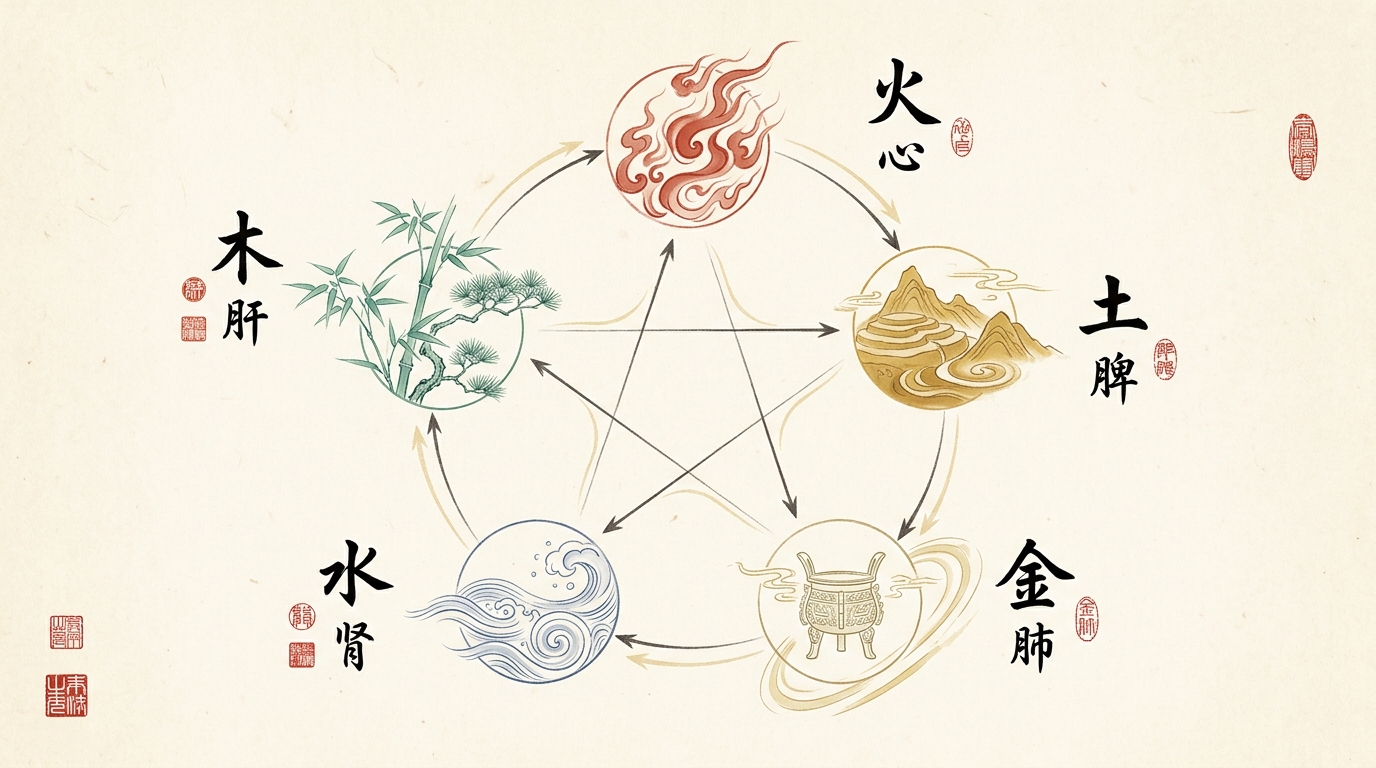
五行生克乘侮图解 · Wu Xing Dynamic Cycle Engine
Wood Phase (Mù)
Zang: 肝 (Liver) · Fu: 胆 (Gallbladder)Wood represents germination, upward growth, flexible expansion, and free-flowing movement (曲直). In the body, Liver Wood ensures the smooth, unobstructed flow of Qi, Blood, and emotions.
“木曰曲直”,象征春天草木萌发、向上向外舒展之性。在人体对应肝胆,主疏泄、喜条达而恶抑郁,统领全身气机之畅达与血液之贮藏调节。
- 五脏 Zang
- 肝 · Liver
- 六腑 Fu
- 胆 · Gallbladder
- 五官 Orifice
- 目 · Eyes
- 五体 Tissue
- 筋 · Sinews & Tendons
- 五志 Emotion
- 怒 · Anger / Frustration
- 五味 Flavor
- 酸 · Sour
- 五季 Season
- 春 · Spring
- 五气 Climate
- 风 · Wind
Nourishes Fire (Heart & Pericardium). Clinical rule: “In Deficiency, tonify the Mother (虚则补其母).”
Restrains Earth (Spleen) from becoming excessive and maintains physiological equilibrium.
《黄帝内经·素问·阴阳应象大论》·Huangdi Neijing · Suwen Ch. 5「东方生风,风生木,木生酸,酸生肝,肝生筋,筋生心,肝主目。」
Dōng fāng shēng fēng, fēng shēng mù, mù shēng suān, suān shēng gān, gān shēng jīn, jīn shēng xīn, gān zhǔ mù.
“The East generates Wind; Wind generates Wood; Wood generates Sourness; Sourness nourishes the Liver; the Liver nourishes the Sinews; the Sinews generate the Heart; the Liver rules the Eyes.”
Establishes the ecological macro-microcosm link between spring growth, wind movement, tendon flexibility, vision, and Liver Qi.
五脏藏象与中西医对照 · Zang-Fu Systems Bridge
Metabolic organ in the right upper quadrant responsible for detoxification, bile synthesis, protein metabolism, and glycogen storage.
位于右上腹的实质性代谢器官,负责解毒、胆汁合成、蛋白质合成及糖原储存。
Frequent sighing, chest/rib-side distension, irritability, mood swings, PMS, wiry pulse (弦脉).
胸胁胀痛、善太息、情绪抑郁或急躁、乳房胀痛、月经不调、脉弦。
Red eyes, throbbing temporal headache, bitter taste in mouth, tinnitus, explosive anger, red tongue with yellow coat.
头晕胀痛、面红目赤、口苦咽干、急躁易怒、耳鸣如潮、舌红苔黄、脉弦数。
Dry eyes, blurred vision, muscle spasms/cramps, pale brittle nails, scanty menses, pale tongue.
眩晕耳鸣、两目干涩、视物模糊、肢体麻木或筋脉拘急、爪甲枯薄、舌淡脉细。
《黄帝内经·素问·灵兰秘典论》·Huangdi Neijing · Suwen Ch. 8「肝者,将军之官,谋虑出焉。胆者,中正之官,决断出焉。」
Gān zhě, jiāng jūn zhī guān, móu lǜ chū yān. Dǎn zhě, zhōng zhèng zhī guān, jué duàn chū yān.
“The Liver is the General of the Armed Forces, from whom strategy and planning emerge. The Gallbladder is the Upright Official, from whom decisiveness emerges.”
Liver plans strategy (vision & adaptability), while Gallbladder executes courageous decisions.
中医藏象核心职能 · TCM Functional Responsibilities
当令时辰: 01:00 – 03:00 (丑时 Chǒu Shí)肝主疏泄 (Gān Zhǔ Shū Xiè)· Governs Free Coursing (Shu Xie)
Ensures the smooth, uninhibited movement of Qi throughout the entire body, regulating emotional equilibrium, digestion (bile secretion & Spleen/Stomach Qi movement), and menstruation.
调畅全身气机,推动血与津液运行;调节情志活动;协助脾胃升降运化与胆汁分泌;调理冲任二脉与女子月经。
肝藏血 (Gān Cáng Xuè)· Stores Blood & Regulates Volume
Stores blood during rest and sleep, and releases it to the sinews and eyes during physical activity ("When a person lies down, blood returns to the Liver — 人卧血归于肝").
贮藏血液、调节血量并防止出血。“人卧血归于肝”,睡眠充足则肝血得养,双目清亮、筋脉柔韧。
在体合筋,开窍于目,其华在爪 (Hé Jīn, Kāi Qiào Yú Mù)· Rules Sinews, Opens into Eyes, Manifests in Nails
Liver Blood moistens tendons and joints; deficiency causes muscle cramps, brittle nails, dry eyes, or floaters.
肝血濡养筋膜与双目,肝血充足则筋强力壮、爪甲红润坚韧、视物清晰。
十二时辰子午流注图 · 24-Hour Meridian Qi Clock
脾经当令 · Spleen Meridian (SP)
The Spleen transforms breakfast into clear Gu Qi and ascends nourishment to the brain and muscles.
脾主运化升清,将胃腐熟的食物转化为气血精微,上输心肺与头目。
Peak morning window for deep mental work, study, and physical movement; stand up and stretch every hour to avoid injuring Spleen Qi ("prolonged sitting injures the flesh — 久坐伤肉").
上午精力最充沛的黄金学习与工作时段;宜间歇起身活动,避免“久坐伤肉”。